By: Zachary Branco 7-24-19 9:45pm
For those of you that do not know, I am currently on vacation in Portugal. The hour change is 5 hours ahead and I am having a tough time adapting, and trying to do the online assignments on-time have been a struggle but don’t worry I’m sure I’ll recover eventually. But as I have been enjoying myself here, I have been very observant and noticed many things that are related to chapters 7 through 9. A few of the things I noticed have to do with others but also with myself.
In chapter 7, “Alcohol and Tobacco”, there were many areas of content that really grasped my attention. The first was the topic of alcohol consumption of college students in the U.S.. I found it very interesting and shocking that 20.4% of women and 23.1% of men in college have never used alcohol. Now this may seem like a low number to researchers and reporters but coming from a college student in today’s society my honest reaction was confused, I expected that number to be lower than what it was. I also found it interesting that more women drink than men. The number is very close but I was still surprised mainly for the fact that I know a few girls that do not drink at all and I think I only know one or two guys who never drink. The chapter mentioned situations that college students tend to drink the most. A few of these “situations” were frats/sororities, traditional celebrations such as St. Paddy’s Day, and pregaming for parties. The information given may be accurate and may try to raise awareness for college students but personally I don’t believe it will be completely effective. The reason for this is because students who live on campus have freedom and can do what they want for the most part, without getting caught. Parents are no longer there to manage and supervise them. I also believe it has to do with the drinking age, this is more political than anything but oh well. I feel that if the U.S. were to lower the drinking age to 18 like other countries have, young adults will have a better understanding of how to control your drinking. Many young adults in the U.S. don’t know how to handle their drinking and lead to many mishaps.
Now for as bad as that may sound, the issue of tobacco products in the U.S. is just as bad, if not worse. About 36 million Americans 18 or older, have used a tobacco product at least once in the past month. The number that threw me for a loop was the age group that smoked the most. My initial reaction was, “those damn teenagers and young adults are a big reason to blame”, but I was wrong. The biggest age group of smokers are between the ages of 25 and 44. When smoking, within time a person will build a dependence of nicotine to perform certain actions and get through the day. And if you don’t have any form of nicotine, if your body or emotions react in a different way you would be experiencing a withdrawal. Once you have reached this much of a dependency, you would probably be clinically considered an addict.
There are many forms of tobacco products the range from cigarettes, cigars, pipes, hookahs, bidis, chewing tobacco, dip, and more. All of these are relatively bad for you, some worse than others. The worst possible form are electronic cigarettes and vapes. Yes you may not be breathing in that tar and actual tobacco substances, but you are inhaling chemicals that you don’t even know about but are there to provide a flavor for enjoyment. Here in Portugal, I have yet to see anyone smoke anything other than a pipe and cigarettes. I don’t know if it is because they are more “old fashioned” but e-cigarettes and vapes aren’t popular here. In the gas stations and little mini side stores, they don’t have any tobacco products other than cigarettes. Which isn’t a good thing, but isn’t a bad thing because ending all sales of cigarettes would have a severe impact on the economy.
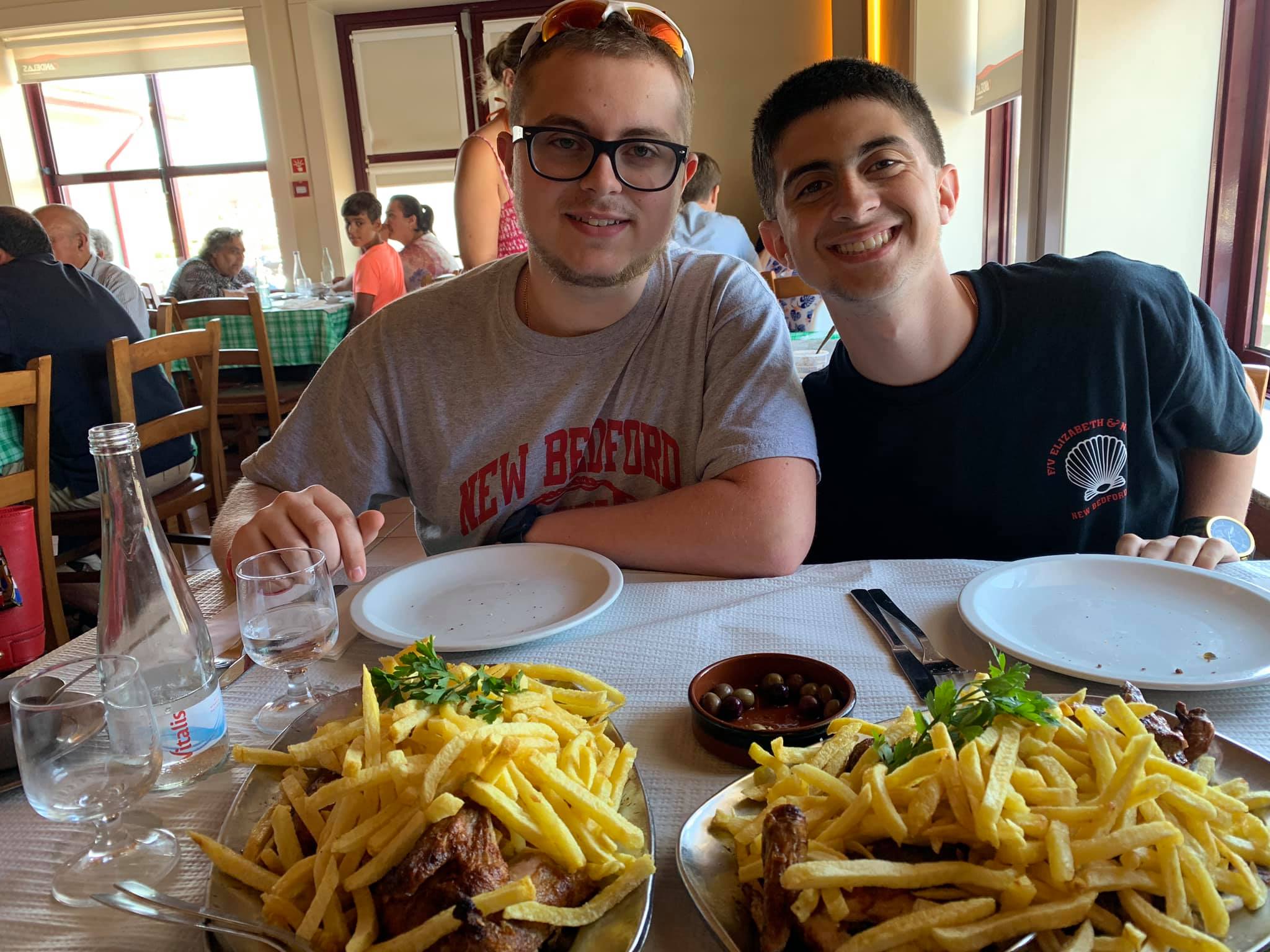
In chapter 8, “Nutrition”, I have realized that my eating habits aren’t the best at home, but during this vacation they are even worse. The meals here are way out of proportion but I absolutely love Portuguese food so it is hard to not eat everything. One thing that I will add is that the food here is fresh and is usually never processed food. So for that, I will give myself a plus.
There are a total of 6 “essential nutrients” that the human body must be consuming which are water, protein, fats, carbohydrates, vitamins, and minerals, all of which play an “essential” role in one’s diet. Water has to be the most important out of the six because the body needs it more frequently to function. Humans can go a few weeks without food in their system but it can’t go longer than a week without water. Water makes up 50-70% of the weight in your body, and is the major component of blood, which carries oxygen and nutrients to tissues while removing metabolic wastes and keeping cells in good condition. If you’ve ever noticed that when you have a headache you are most likely dehydrated? 90% of headaches and migraines are caused by lack of water.
Now proteins are very valuable because they are known to be the “body builders”, as the book likes to call them. Proteins develop and also repair bones, muscles, skin, and blood cells, while also protecting us from diseases caused by chemical activities from inside the body. Proteins are usually known as meats such as chicken, steak, and fish. But you can also get a great source of protein from eggs and nuts. A source of protein that is not a healthy option and can become very dangerous are protein supplements. Majority of supplements haven’t been fully studied and aren’t clinically safe. Lately, there have been reports of young teenagers using supplements to get more muscular but they are not aware of the possible side effects that may occur.
I used to play football and baseball in high school and would always workout because it was required, especially for football. I would only use protein powder, which there is nothing wrong with using that and I still use that to this day. But I remember teammates that would use other supplements such as creatine and others that were supposed to help their muscle mass and enhance endurance and stamina. Well one of the supplements gave them both some sort of infection and had to go to the emergency room for testing and specific antibiotics. Turns out that the supplement wasn’t safe (as said in the chapter) and resulted in the two players missing 2 weeks of football activities.
In chapter 9, “Weight Management and Body Image”, I believe that this a mostly a cultural, environmental, and socio-economical problem. There are a few reasons why I say this. Let’s start off with location. The U.S. has the highest proportion of obesity in the world resulting in 13%. Now countries that have a large population similar to America, such as China and India have a combined percentage of 15. As I mentioned earlier in this post, the food here in Portugal is freshly caught and grown. A very small percentage of the food here is processed or packaged compared to countries like America where that is majority of food. Also, here in Portugal fast food doesn’t really exist. The only fast food that is here is in big cities such as Lisbon or Porto and at the airport. And even that is like 2 or 3 fast food places. But in America, everywhere you go and turn there is a fast food place ranging from dominos, dunking donuts, mcdonalds, subway, and many more. This to me is a location thing but can also be viewed as a cultural thing.
Now as for socioeconomics, the ones who can afford to eat well will and the ones who can’t won’t, it is sad but true. If you are on a very tight budget you might rely on canned goods, processed foods, and fast food to feed yourself and your family. Whereas people with money can afford to go to the store and fill their refrigerator with good, quality food, or go out to a quality restaurant. I’ve seen this on a first hand experience, especially growing up in a city like New Bedford.
But there are ways to help stop obesity and one of them is by mindful eating. A form of mindful eating is counting calories and understanding the balance of energy. The balance of energy is matching the energy intake (anything you consume) with energy expenditure (any form of activity or physical movement). If you decide to eat a meal with about 1,000 calories and decide to lay on the couch and watch TV for the remainder of the day that is not balancing your energy properly which will result in weight gain. Another way to stop or slow down obesity is by improving your eating habits. It is not easy, but with the right mindset and motivation from others it is very possible. And to do this the correct way, you should probably consult with a dietary adviser to find a eating plan that correlates with what you want to accomplish.
I did something similar at the start of 2019. After the holiday season had ended I told myself I wanted to make a change in my life and started eating healthier. I weighed about 230 pounds, which was the most I have ever weighed in my entire life. I ate chicken and fish as protein for my meals, and every side was a salad with a different vegetable. Before vacation I weighed 203 pounds which is almost a 30 pound loss. I am very happy and ecstatic about my progress but I know it is not the same right now. After my vacation, it will be back to healthy habits and the gym for me.
 Zach's Health Blog